
Join our Team!
PhD and Postdoc positions available! Join us to embark on a journey to develop new touch sensors for future robots!
TactoChem awarded! See news here, here, and here.
Our Goal
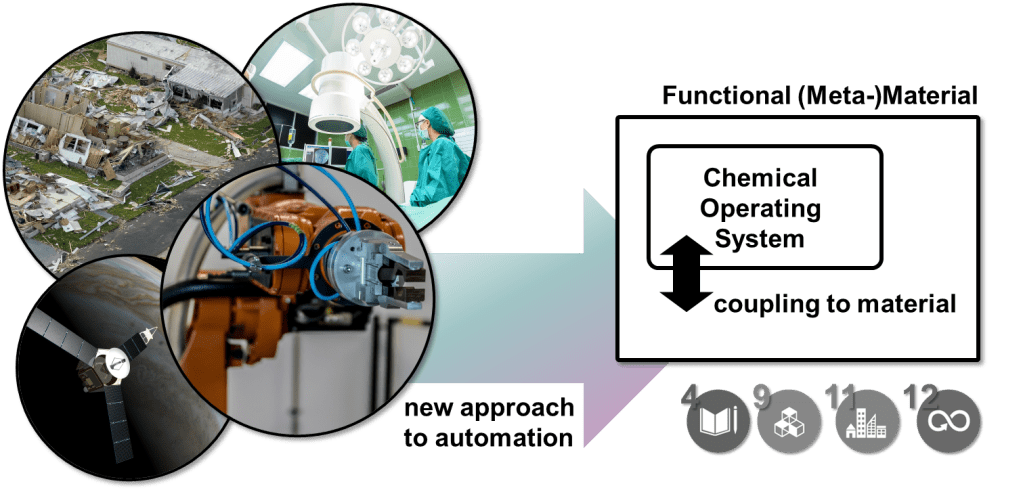
Our goal is to design and fabricate new soft (robotic) materials that can make decisions, self-regulate, coordinate their action, and move autonomously!
Towards this goal, we will build on and accelerate academic and industrial developments within systems, supramolecular, and mechanochemistry, active and soft matter physics, and materials engineering.
In the Lerch group, we believe that chemistry can provide new solutions for material automation, providing novel types of operating systems and hardware that can automate (micro)robots and polymeric coatings for applications in biomedical and industrial settings.
How we reach our goal
Self-regulation is fundamental to life; think of biological processes that allow us to maintain body temperature, regulate hormones, uphold our day-and-night rhythm, or orchestrate our development from a single cell to a fully developed organism. In our material world we know self-regulation from thermostats and smart homes to devices controlling flight stabilization in drones and traffic fluxes in cities. These devices make our world safer and extend the life time of our appliances and machines. They are, however, themselves built from materials that show little to no material-based self-regulation, that is the ability to adjust their internal chemistry, mechanics, or optical properties without electronic control. In our research program, we take inspiration from biological organisms and design materials with the ability to self-regulate their functions autonomously, which we hope will make materials more reliable, sustainable, and useful. By providing new chemistry-based solutions to motion, decision-making, and communication, we empower new (and integrated) control concepts for: (1) robotics, (2) functional coatings, and (3) minimally invasive surgery.
More specifically, we develop:
- chemical reaction networks that integrate input, self-regulate (feedback control), and make decisions,
- ways to integrate such reactions in the underlying material (think ´software-hardware´ handshake),
- new material components operated by these operating system, including coatings, textiles, and robotic components.
The Lerch Research Group is located at the Stratingh Institute for Chemistry at the University of Groningen and is part of ARC CBBC and HTRIC.
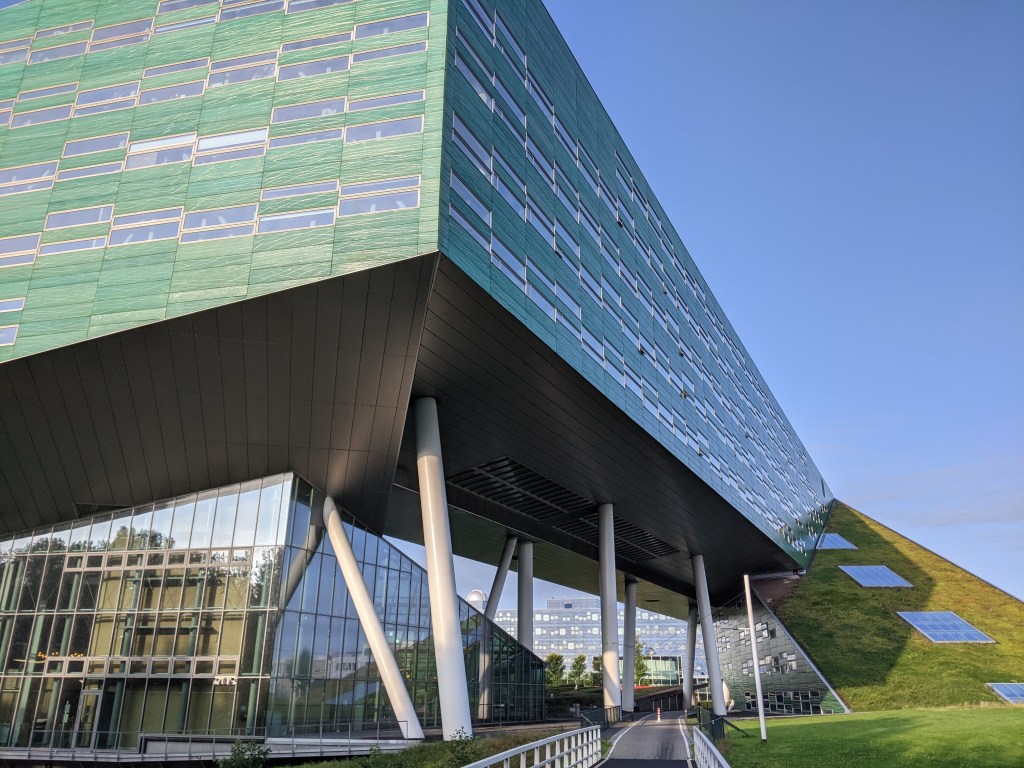
Our Funders

Sustainability
Sustainability is at the heart of how we do research (LEAF silver level, = Laboratory Efficiency Assessment Framework) and what we do (including industrial collaborations in the context of ARC CBBC). Our work aligns with the UN 2030 agenda for sustainable development, addressing in particular sustainable development goals 9 (industry, innovation, and infrastructure), 11 (sustainable cities and communities), and 12 (responsible consumption and production). Through continuous teaching innovation and public engagement we also help reach goal 4 (quality education).
 Lerch Lab